How to Read Your Heart Rate Variability (HRV): The Complete Guide to Optimizing Your Recovery
Heart Rate Variability — or HRV — is arguably the most powerful health indicator that most people completely ignore.
Yet, it's what elite athletes, medical teams, and performance coaches have been using for years to manage training load and prevent overtraining.
In this guide, we'll explain exactly what HRV is, how to read it, what the numbers concretely mean, and how to use it to make better daily decisions.
What exactly is Heart Rate Variability (HRV)?
Contrary to what one might think, a healthy heart does not beat like a perfect metronome. There are always slight variations between each beat — sometimes a few milliseconds longer, sometimes a few milliseconds shorter.
This natural irregularity is called heart rate variability.
These variations are controlled by the autonomic nervous system, which regulates all involuntary functions of your body: heart rate, digestion, stress response, recovery.
A high HRV indicates that your autonomic nervous system is flexible, responsive, and well-balanced — a sign of good recovery and overall health.
A low HRV, on the other hand, indicates a nervous system under tension, in survival mode.
In summary: the higher your HRV, the better your body is recovered and ready to perform. The lower it is, the more your body needs rest.
How is HRV measured?
HRV is measured in milliseconds (ms) and is generally expressed using an index called RMSSD — the root mean square of successive differences between heartbeats.
It is the most widely used measure in modern fitness trackers because it is the most sensitive to variations in the parasympathetic nervous system.
The most reliable measurement is taken at night, during sleep, when the body is at rest and external factors such as stress, movement, or diet are minimized.
This is why serious health trackers measure your HRV overnight rather than on demand.
How to read your HRV numbers: what the values mean
There is no universal value — compare yourself to yourself
This is the most important and often misunderstood point: an HRV of 45 ms can be excellent for one person and mediocre for another.
Values vary significantly with age, gender, training level, and genetics.
A 25-year-old athlete might have an HRV of 80 ms, while a sedentary 55-year-old might have a normal HRV of 25 ms.
What matters is not the raw number. What matters is your personal trend.
Your baseline — your average value over 2 to 4 weeks — is your true reference. It's against this that we assess whether you are in good shape or fatigued.
Reading the signals: green, orange, red
Most HRV tracking applications use a color system based on the deviation between your daily value and your personal baseline:
- Green: your HRV is above your average. Your nervous system is well-recovered. You can train intensely, push harder, or tackle a demanding day in good condition.
- Orange: your HRV is close to your average. The state is neutral. Moderate training is generally recommended.
- Red: your HRV is significantly below your baseline. Your body is under stress. Prioritize recovery, active rest, and stress management.
Pushing through training or accumulating stress in this state increases the risk of decreased performance, persistent fatigue, and sometimes even injury.
Factors that lower HRV
Understanding what negatively impacts your HRV allows you to take concrete action on your recovery.
- Alcohol: even a single drink can lower HRV the following night.
- Lack of sleep: every lost hour affects your nervous recovery.
- Chronic stress: professional or personal, it keeps the body on alert.
- Overtraining: too much intensity without sufficient recovery causes scores to drop.
- Dehydration and unbalanced diet: your body recovers less well.
- Illness: HRV often drops 24 to 48 hours before the first visible symptoms.
Factors that increase HRV
Conversely, certain levers directly improve your heart rate variability:
- Deep and regular sleep: this is the most powerful lever.
- Heart coherence and meditation: even a few minutes a day can have a measurable effect.
- Moderate aerobic training: light running, cycling, swimming, active walking.
- Good hydration.
- Cold exposure: cold showers, cold baths, or cryotherapy depending on your tolerance.
- An anti-inflammatory diet.
HRV and athletic performance: how to use it concretely
The most practical use of HRV for an athlete is to manage their training based on their actual recovery status — rather than blindly following a fixed program.
Studies on runners and strength athletes show that groups who adjust their training load based on their HRV progress faster and get injured less than those who follow a rigid program.
Specifically:
- On days when your HRV is high, you can push harder,
- On days when it's low, it's better to recover actively or lighten the load.
This simple approach can transform your long-term progress, while reducing the risk of overtraining.
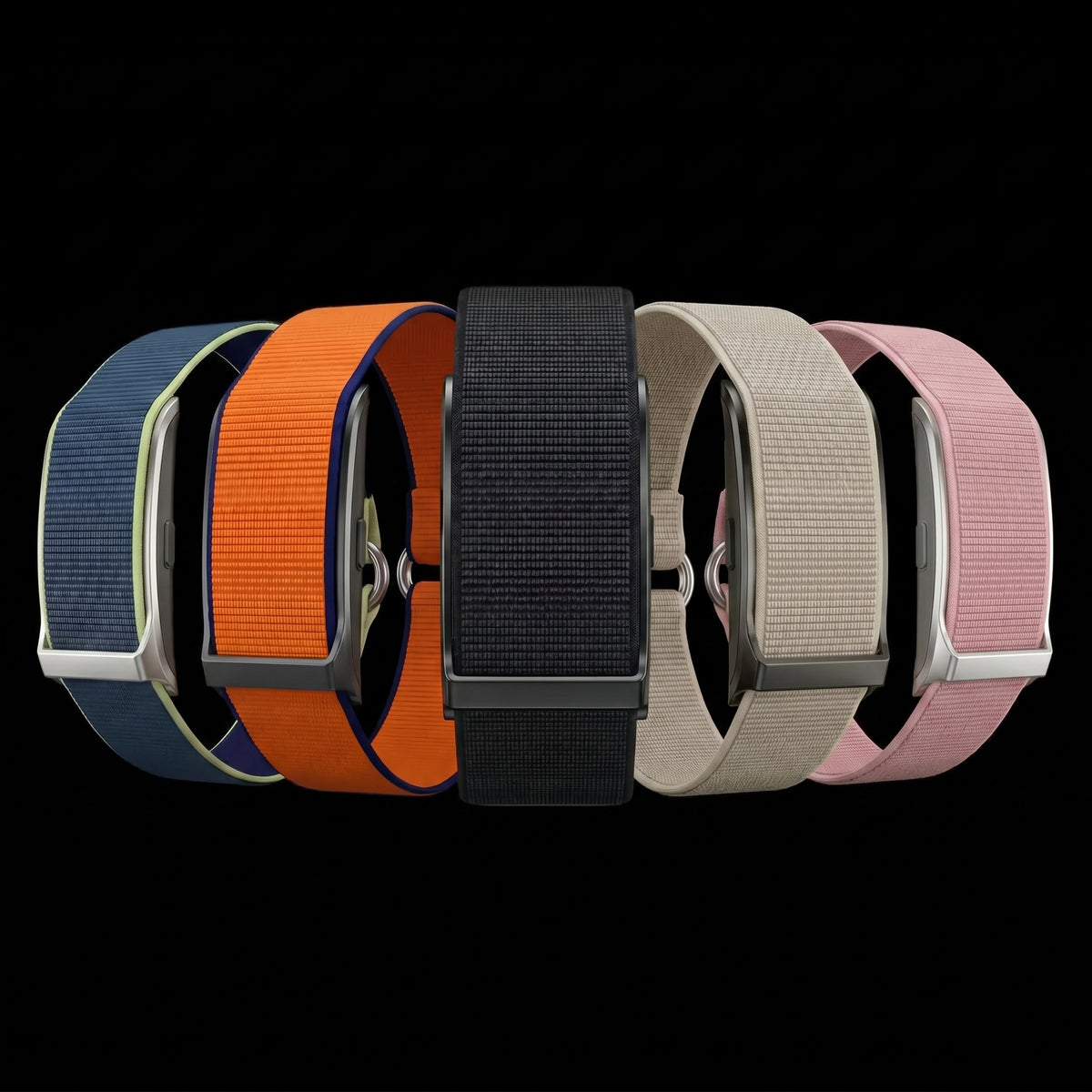
👉 OnPulse measures your HRV every night and shows you a clear recovery score each morning with a simple recommendation: push hard, moderate training, or prioritize rest.
What to remember about HRV
- HRV directly reflects your recovery status and nervous balance.
- Always compare your score to your own baseline, never to others'.
- Low HRV is a signal for rest, not a weakness.
- Deep sleep is the most powerful lever to improve your HRV.
- Measuring your HRV daily with a reliable tracker is the simplest method to make better recovery decisions.
Discover OnPulse to track your HRV and optimize your recovery