Reading time: 8 minutes
The story that changed everything
Mélodie is a sports coach. She trains 5 times a week, meticulously follows her recovery, and monitors her sleep like a professional athlete.
She invested in a high-end Garmin. Over €400. One of the best trackers on the market according to all reviews.
Problem: Mélodie has a tattoo. A beautiful, dense, black tattoo that covers a good part of her left wrist — exactly where she wears her watch.
Result after a few weeks: completely aberrant heart rate measurements. 180 BPM at rest. 55 BPM during a sprint. Unusable sleep data. And the obligation to download a third-party application, connect an external sensor, and juggle between two interfaces just to get somewhat consistent numbers.
A €400 watch. Hours lost searching for solutions on forums. And in the end, a completely broken user experience.
She is not an isolated case. Far from it.
The problem brands don't want to tell you about
When you walk into an Apple Store or a Garmin retailer, no one asks you if you have tattoos before selling you a smartwatch for €300, €400, or €600.
Yet, Apple openly admits it in its terms of use. Garmin does too. Fitbit as well. All admit, in fine print, that tattoos can affect the accuracy of heart rate sensors.
But this information is never highlighted. Never mentioned by sales assistants. Never displayed on the boxes.
And millions of tattooed people find themselves with an overpriced smartwatch that doesn't do what it was bought for.
In France, over 20% of the adult population has at least one tattoo. This is a massive, systemic problem, deliberately ignored by major brands.
Why tattoos block optical sensors — the simple explanation
To understand the problem, you need to understand how smartwatches work.
All consumer watches — Apple Watch, Garmin, Fitbit, Samsung Galaxy Watch — use the same basic technology to measure your heart rate: photoplethysmography, or PPG.
The principle is simple. The watch sends light — usually green — under your skin. This light is absorbed by your blood. By measuring the variations in absorption with each heartbeat, the watch calculates your heart rate.
It works perfectly on untattooed skin. On tattooed skin, it's a different story.
The ink pigment of the tattoo directly interacts with the light emitted by the sensor. Depending on the ink color, tattoo density, and its position, the ink will absorb, reflect, or scatter the green light chaotically. The sensor receives a noisy, incoherent, unusable signal.
The most problematic situations:
- Black and very dark tattoos are the worst. Black ink absorbs all wavelengths of light, including the green used by PPG sensors. The signal returning to the sensor is almost nil.
- Tattoos with a lot of filling cause more problems than fine line or dot work tattoos. The more surface area the ink covers, the greater the interference.
- Position is crucial. A tattoo on the back of the hand will not cause any problems. A tattoo on the inside of the wrist — exactly where the sensor is positioned — creates maximum interference.
- The combination of dark skin + tattoo further amplifies the problem. Green PPG sensors already struggle more on dark skin. Add a tattoo and the data becomes practically unusable.
The "solutions" you've probably already tried
When tattooed users discover that their watch is no longer working correctly, they look for solutions. Here's what you've probably already tried — and why it doesn't really solve the problem.
Moving the watch higher up the arm
This is the first reflex. If the tattoo is on the wrist, you move the watch up the forearm, where the skin is not tattooed. This can work. But it's uncomfortable for sports activities. The watch slips. The strap is not designed for this position. And if your tattoo goes up your forearm, you're stuck again.
Using a third-party application
This is the solution Mélodie found. Applications sometimes allow for partial data correction. But you're juggling between two interfaces. You sometimes pay an additional subscription. And the data remains approximate — you're correcting a noisy signal, not eliminating it.
Buying a heart rate strap
A chest strap is the most accurate solution for heart rate. It uses a different technology that is not affected by tattoos. But you're adding an accessory to wear in addition to your watch. You pay extra for it. And for sleep, recovery, and daily tracking, a chest strap is clearly not a practical solution.
Changing brands hoping it will change something
Some users switch from Apple Watch to Garmin, or from Garmin to Samsung. But since they all use the same green PPG technology, the result is identical. You've just spent money for nothing.
What major brands could have done — and didn't
The technology to solve this problem exists. It's well-known. Using infrared or red light in addition to green light can reduce interference related to tattoos and dark skin. These wavelengths penetrate the skin differently and are less affected by ink pigments.
Multispectral sensors combining several wavelengths provide much more reliable results on tattooed skin. The positioning of the sensor also plays a major role. Some areas of the wrist are less susceptible to interference than others.
But for major brands, addressing this problem would mean publicly admitting that a significant portion of their users have a degraded experience. This is a commercial risk they are unwilling to take. So they leave the mention in fine print in the T&Cs and continue to sell their watches to everyone, tattooed or not.
OnPulse: designed to work on all skin types
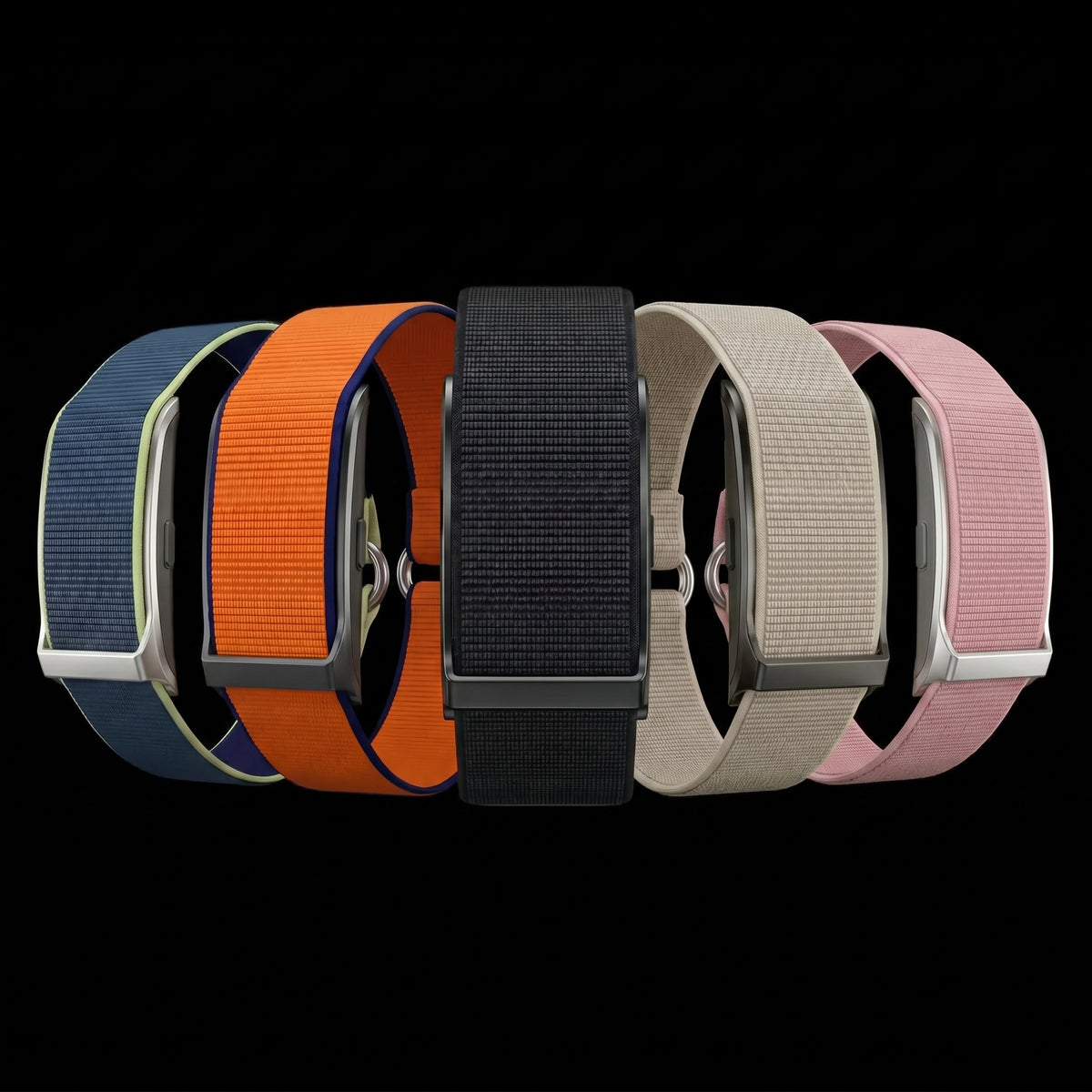
OnPulse is not just another smartwatch. It's a health bracelet designed from the ground up to be accurate, reliable, and accessible — including for tattooed individuals.
Its sensor uses a combination of technologies that significantly reduces the impact of tattoos on measurement quality. The calibration is different from consumer watches. The sensor's positioning is optimized.
The concrete result: users who couldn't get any usable data with their Garmin or Apple Watch now get consistent data with OnPulse, session after session. No third-party app. No additional accessories. No fiddling.
What OnPulse measures
- ❤️ Continuous heart rate — Accurate data even with a wrist tattoo.
- 😴 Comprehensive sleep analysis — Light, deep, and REM phases. Actionable insights to improve your recovery night after night.
- ⚡ Daily recovery score — Is your body ready to train hard today? OnPulse gives you a clear answer every morning.
- 📊 Heart Rate Variability (HRV) — The indicator used by elite athletes. HRV reflects your stress level, fatigue, and recovery capacity.
- 🌸 Female cycle tracking — For women who want to understand how their cycle impacts their energy, sleep, and athletic performance.
- 🏃 Comprehensive sports tracking — Running, cycling, weight training, swimming, yoga.
- 🫁 Oximetry (SpO2) — The oxygen level in your blood. Useful for detecting nocturnal recovery problems.
The honest comparison
- Apple Watch Series 9: €399 minimum. If you have a wrist tattoo, heart and sleep data will be degraded. You pay €400 for a watch that doesn't fulfill its main health function.
- Garmin Forerunner / Fenix: €300 to €800. Same PPG technology. Same problem with tattoos. Tattooed athletes often end up adding a heart rate strap for €80-150 more.
- Whoop 4.0: €0 upfront, then €30/month minimum. Over 12 months you've paid €360. Over 24 months, €720. And Whoop is not immune to the tattoo problem.
- Fitbit: Same technology, same problem. And Fitbit is now owned by Google.
- OnPulse: €89.90. Once. Zero subscription. Zero hidden fees. Free delivery in France.
What tattooed users say
"I had an Apple Watch for 2 years and my heart rate data was completely off because of my tattoo. With OnPulse I finally have usable data."
— Thomas, 31, crossfitter
"I had been looking for a solution for months. I had even bought a heart rate strap in addition to my Garmin. OnPulse simplified everything."
— Sarah, 27, runner
"The value for money is unbeatable. And for the first time since I got my wrist tattoos, I have consistent sleep tracking."
— Julien, 34, fitness coach
Frequently Asked Questions
Do all tattoos cause problems with smartwatches?
No. The impact depends on the ink color (black is the most problematic), the density of the tattoo, and its position relative to the sensor. A light dot work tattoo will cause fewer problems than a dense black tattoo covering the entire wrist.
Do Apple and Garmin officially acknowledge this problem?
Yes, but in fine print. Apple states in its documentation that tattoos can affect the accuracy of the optical sensor. Garmin does the same. This information is available but rarely highlighted at the time of purchase.
Does OnPulse work for all types of tattoos?
OnPulse is designed to minimize the impact of tattoos on measurement accuracy. For extreme cases — full black tattoo on the entire wrist — we recommend wearing it slightly higher on the forearm.
Is there a subscription with OnPulse?
No subscription. You pay €89.90 once and get access to all features for life. No surprises on your credit card next month.
What is the refund policy?
OnPulse offers a 30-day money-back guarantee. If you are not satisfied for any reason, you return the bracelet and get a full refund. No questions asked.
Is OnPulse compatible with iPhone and Android?
Yes. OnPulse works with iOS and Android via the dedicated application available on the App Store and Google Play.
What is the battery life?
OnPulse offers up to 7 days of battery life with normal use. You charge it once a week, that's all.
The decision is simple
If you have a tattoo and a smartwatch that no longer provides you with usable data, you now have all the information to decide.
You can continue to tinker. Change brands hoping for a different result with the same technology. Pay extra for a heart rate strap. Download third-party apps.
Or you can choose a bracelet designed to work, whatever your skin type, with no recurring fees, and for less than €90.
€89.90. Once. Free delivery. 30-day money-back guarantee.