Sports recovery: the 5 indicators to monitor to progress without injury
Do you train regularly but your performance is stagnating? Do you wake up tired despite 8 hours of sleep? The problem may be your recovery. Sports science is clear: you don't progress during exertion, you progress during recovery. Here are the 5 key indicators to monitor to optimize each session.
1. Heart Rate Variability (HRV) — the king indicator of recovery
HRV measures the variation between each heartbeat. Contrary to popular belief, a high HRV is a sign of good health and optimal recovery — your nervous system is flexible and responsive. A low HRV indicates that your body is under stress. Monitor your HRV every morning: if it drops significantly compared to your baseline, your body is telling you it needs rest.
2. Resting heart rate — the thermometer of your fitness
Has your resting heart rate increased by 5 to 7 beats compared to your normal? This is a clear warning sign of overtraining or a budding infection. Professional athletes have been measuring their morning HR every day for decades — it's one of the simplest and most reliable methods to assess recovery status.
3. Sleep quality — when night becomes training
During deep sleep, your body secretes growth hormone, repairs muscle fibers, and consolidates motor learning. Deep sleep is the invisible training that all champions prioritize. Less than 1.5 hours of deep sleep per night? Your muscle recovery is compromised, regardless of your post-workout nutrition.
4. Oxygen saturation (SpO2) — the efficiency of your cellular recovery
Normal SpO2 is between 95% and 100%. Below 94%, your body lacks oxygen to properly regenerate muscle tissue. During sleep, a regularly dropping SpO2 can indicate undiagnosed sleep apnea — one of the most underestimated causes of chronic fatigue in athletes.
5. Overall recovery score — intelligent synthesis
Modern fitness trackers aggregate HRV, resting HR, sleep quality, and activity to generate a unique recovery score. This score allows you to make simple decisions: green light — push hard today. Orange light — moderate training. Red light — active recovery or complete rest.
How to measure these 5 indicators daily?
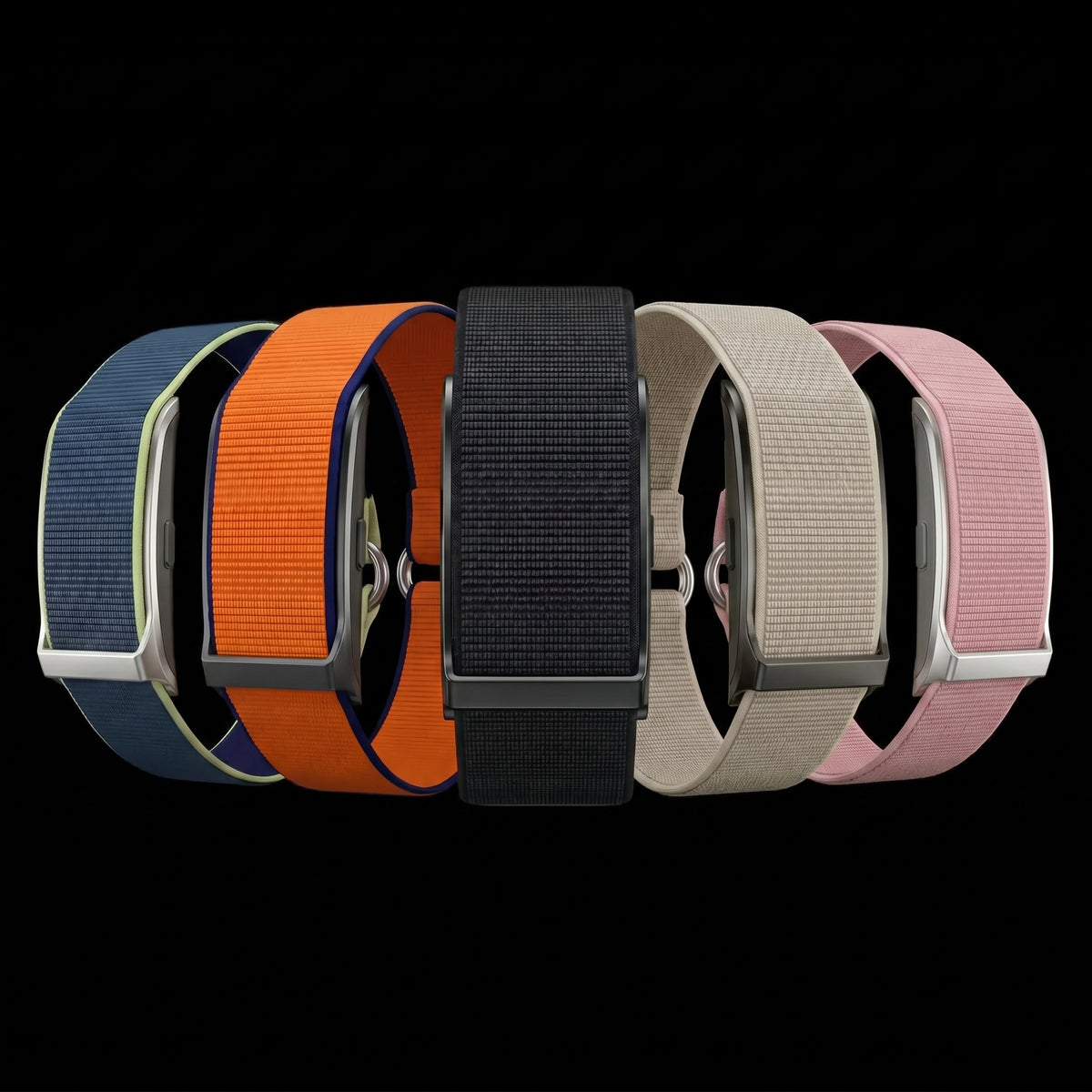
Simply wear a fitness tracker capable of continuously measuring this data. High-end models like the Garmin Fenix or Whoop do this perfectly — but at €300 to €500 plus subscription. OnPulse offers the same essential functionalities — HRV, 24/7 HR, SpO2, recovery score, and sleep analysis — for less than €90, without a monthly subscription.