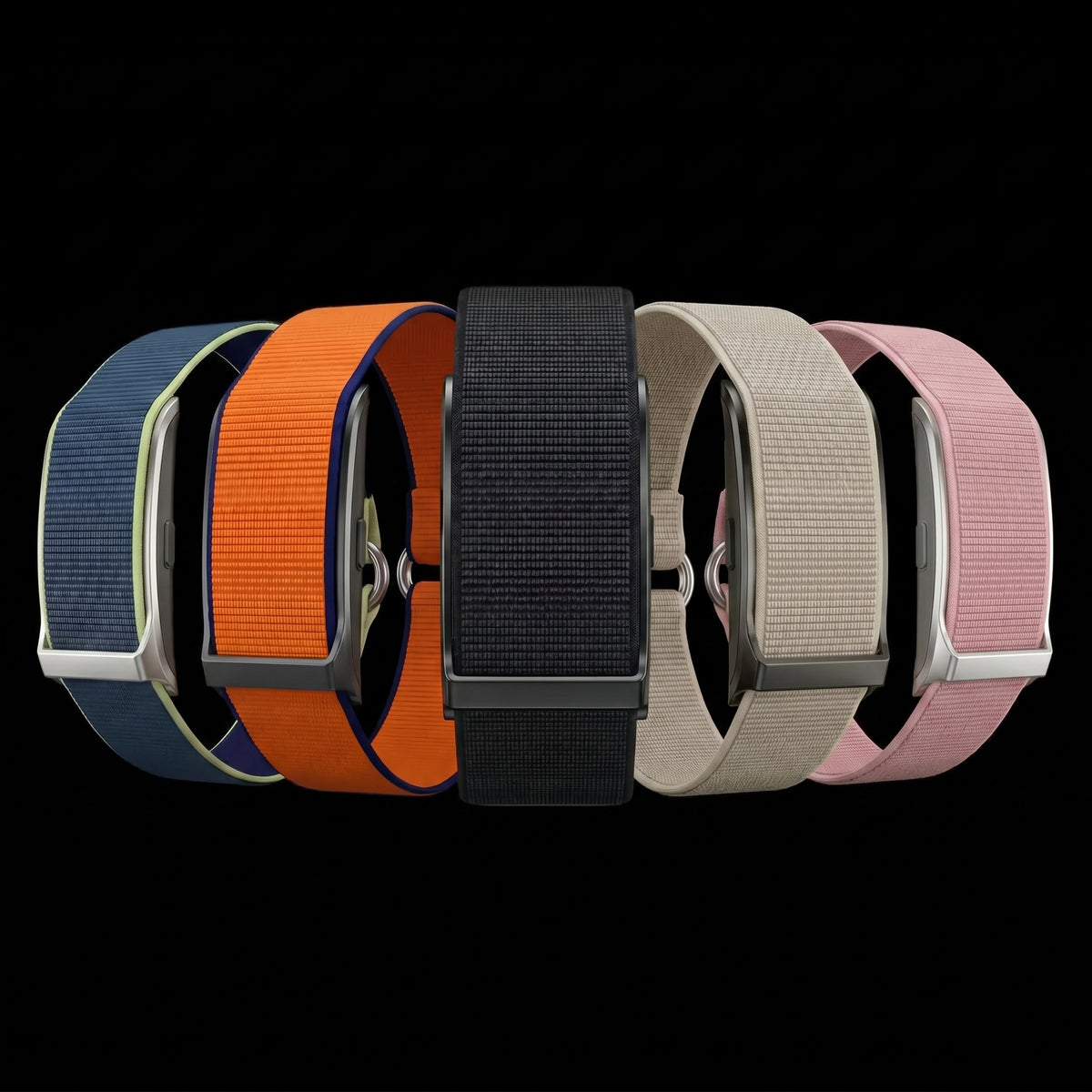
Best Subscription-Free Fitness Tracker in 2026: An Honest and Straightforward Comparison
The fitness tracker market is saturated. Between smartwatches costing €400 and low-end bracelets that don't live up to their promises, finding a serious tracker without paying an additional monthly subscription is an uphill battle.
In this article, we'll review the criteria that really matter, the pitfalls to avoid, and the genuinely interesting options available in 2026 to monitor your health, sleep, and athletic performance without breaking the bank every month.
Why Monthly Subscriptions Have Become the Number One Problem for Fitness Trackers
The trend is clear: in recent years, fitness tracker manufacturers have adopted the SaaS model. You buy the device, then you pay monthly to access advanced data.
Whoop charges between €25 and €40 per month. Garmin Connect Premium costs €6 per month. Some Oura Ring features also require a monthly subscription.
Over 12 months, a €30 per month subscription amounts to an additional €360 — often more than the price of the device itself.
For an amateur athlete or someone who simply wants to track their sleep, recovery, and activity, this model quickly becomes difficult to justify.
The good news: serious, subscription-free alternatives are now available, offering comparable features to market leaders.
Essential Criteria for Choosing a Good Fitness Tracker in 2026
1. Sensor Accuracy
This is the number one criterion. A tracker that gives you bad data is worse than no tracker at all.
Things to check:
- continuous heart rate accuracy,
- HRV analysis quality,
- reliability of phase-based sleep tracking,
- and the accuracy of the built-in GPS.
2. Battery Life
To properly track your sleep, your tracker needs to last several days without recharging.
Below 5 to 7 days, you'll have to remove it too often — and you'll lose precisely the most important nighttime data.
The best models on the market offer between 7 and 40 days of battery life depending on usage.
3. Data Richness Without Subscription
Carefully check what is accessible for free in the application. Some trackers display raw data but reserve scores, analyses, or recommendations for a paid subscription.
A good subscription-free tracker should provide access to:
- a sleep score,
- a recovery score,
- HRV,
- SpO2,
- 24/7 heart rate,
- and personalized recommendations.
4. Compatibility and Ecosystem
The tracker should be compatible with iPhone and Android, but also integrate easily with apps you already use, such as Apple Health or Google Fit.
A device locked into a closed ecosystem quickly loses much of its daily appeal.
Our Selection of the Best Subscription-Free Fitness Trackers in 2026
OnPulse — The Best Value for Money on the Market
The OnPulse stands out with a simple promise: you pay once, and you access all features without additional monthly fees.
It offers comprehensive tracking:
- 24/7 heart rate,
- HRV,
- SpO2,
- blood pressure,
- cycle-based sleep tracking,
- 127 sport modes,
- built-in GPS,
- and up to 40 days of battery life.
What truly differentiates it: the application doesn't just display numbers. It translates data into concrete, personalized recommendations based on your own state.
In other words: less irrelevant data, more genuinely actionable information.
View the OnPulse and its complete features
Fitbit Inspire 3 — Good Value for Money, but Limited Ecosystem
The Fitbit Inspire 3 is a solid option around €80 to €100.
It offers decent sleep tracking, about 10 days of battery life, and good compatibility with iOS and Android.
Its main drawback: some advanced features require a Fitbit Premium subscription. Without a subscription, the experience remains decent, but less complete.
Xiaomi Mi Band 8 — The Honest Low-Cost Option
Around €30 to €40, the Mi Band 8 provides basic activity, sleep, and heart rate tracking.
For this price, it gets the job done. However, it remains limited for people who truly want to optimize their recovery or analyze their fitness level.
The data is simpler, the scores less advanced, and the experience more oriented towards "basic tracking" than "intelligent monitoring."
What You Absolutely Must Avoid
- Trackers that display an attractive entry price but hide a mandatory subscription to unlock essential features.
- Devices without built-in GPS if you run, cycle, or play sports outdoors regularly.
- Trackers without HRV analysis, even though it's one of the best indicators of recovery.
- Brands without clear after-sales service or serious warranty.
Our Verdict
In 2026, a good subscription-free fitness tracker must combine four things: reliable sensors, good battery life, a truly useful application, and full data access without monthly fees.
This profile is still rare on the market.
If your goal is to seriously track your sleep, recovery, and activity without paying every month, OnPulse is one of the most consistent options today.
Its positioning is clear: a simple, complete, accessible, and long-lasting solution.